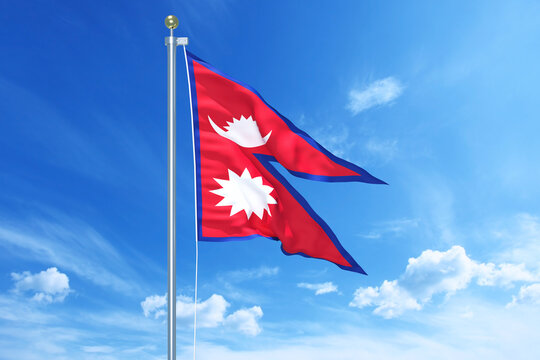
Nepal’s agenda today spans diplomatic positioning, party leadership formation, and concrete public and economic governance measures.
Politics & Governance
Prime Minister Balen Shah clarified his earlier statements on Nepal’s border dispute with India, saying the issue is being handled through diplomatic dialogue and that Nepal does not seek third-party mediation. He added that his mention of Britain related to historical evidence regarding the Kalapani and Lipulekh disputes, while opposition parties continued to criticize his stance. Prime Minister Balen clarifies remarks on border dispute
The Rastriya Swatantra Party (RSP) advanced its internal leadership process in Chitwan, with voting expected to follow closed-door proceedings. Rabi Lamichhane was elected unopposed as party President, while nominations and voting for Central Committee posts continue under newly set criteria. Lamichhane elected unopposed as RSP President
Courts & Accountability
Accountability and state capacity concerns were underscored by a reported police infrastructure shortfall, with hundreds of Nepal Police units lacking basic facilities. Inspector General Dan Bahadur Karki reported that 789 units have no toilets and 781 lack office buildings, with some units operating from rented premises. Nepal Police in crisis as hundreds of units lack offices and toilet facilities
Separately, the country’s broader governance and diplomatic accountability challenge is framed as how Nepal maintains sovereignty while managing pressure and influence from major powers. The historical and ongoing balancing act between China, India, and the United States is described as requiring sustained diplomatic agency. Nepal navigating great powers: China, India and the United States from the Cold War to the 21st Century
Economy & Business
Nepal’s foreign employment sector faces mounting financial pressure on workers amid policy confusion and ineffective measures, with the labor ministry signaling proposed legal and program amendments. Labor Minister Ramji Yadav described the current framework as a “policy trap,” and the government plans to amend the Foreign Employment Act and implement changes to the “free visa, free ticket” approach. वैदेशिक रोजगार : सरकारी नीतिकै मार, श्रमिकमाथि थपिँदो आर्थिक भार
In the business-policy arena, Udesh Rani of the National Independent Party said she will raise private-sector concerns in Parliament, citing widespread negative perceptions toward entrepreneurs. Her stated goal is to influence policy to improve productivity while addressing what she described as the chaotic parliamentary environment. ‘निजी क्षेत्रका समस्या आफैंले भोगेकी छु, संसद्मा यसलाई उठाउनेछु’
Society & Community
Public safety and transport monitoring efforts expanded in Kathmandu, with reports that over 3,300 public vehicles have been equipped with cameras and GPS technology. The initiative is intended to improve safety and enable better monitoring of public transportation operations. Over 3,300 Kathmandu public vehicles equipped with cameras, GPS
At the party-internal level, the RSP set stricter candidacy requirements for leadership roles as part of its first general convention in Chitwan. The party introduced rules requiring 51 supporters for the chairperson role and 21 supporters for other positions, alongside a large field of candidates for Central Committee posts. RSP General Convention: Strict election criteria introduced, tougher candidacy requirement enforced RSP general convention: Over 400 candidates in fray for Central Committee posts
Date: June 24, 2026 (AD) | B.S.: Asar 10, 2083
Top News
1. Nepal navigating great powers: China, India and the United States from the Cold War to the 21st Century (english.onlinekhabar.com)
Nepal's geopolitical landscape is shaped by its strategic location between China, India, and the United States, necessitating a careful balance of sovereignty and diplomatic agency. Historically, Nepal has navigated complex relationships with these powers, maintaining a policy of non-alignment during the Cold War and seeking to assert its independence through initiatives like the 1975 proposal for a "Zone of Peace." As the global order evolved post-Cold War, Nepal faced new challenges and opportunities, adapting its foreign policy to preserve national interests amidst the rising influence of its neighbors and global actors.
2. RSP General Convention: Strict election criteria introduced, tougher candidacy requirement enforced (theannapurnaexpress.com)
The Rastriya Swatantra Party (RSP) is holding its first general convention in Chitwan, implementing strict eligibility criteria for leadership positions. Candidates for the chairperson must secure support from 51 members, while other positions require 21 supporters, with the aim of ensuring capable leadership. The election process is set to begin following the closed session of the convention.
3. RSP general convention: Over 400 candidates in fray for Central Committee posts (theannapurnaexpress.com)
More than 400 candidates have submitted nominations for 99 Central Committee positions of the Rastriya Swatantra Party (RSP), with the first list of candidates set to be published today. Rabi Lamichhane was elected unopposed as party President, and around 4,000 representatives are expected to vote using 80 electronic voting machines, while members abroad can vote via a mobile app. The RSP is holding its first general convention in Chitwan, with 3,849 representatives participating.
4. Nepal Police in crisis as hundreds of units lack offices and toilet facilities (english.onlinekhabar.com)
The Nepal Police face a significant crisis, with nearly 800 units lacking both office buildings and toilet facilities. Inspector General of Police Dan Bahadur Karki reported that 789 units have no toilets and 781 lack office buildings, affecting even those in the Kathmandu Valley. Additionally, 363 police units operate from rented premises, and 835 lack barracks, highlighting the urgent need for improved infrastructure and resources.
5. वैदेशिक रोजगार : सरकारी नीतिकै मार, श्रमिकमाथि थपिँदो आर्थिक भार (www.ratopati.com)
The foreign employment sector in Nepal is facing challenges due to government policy confusion, external pressure, and internal syndicates, leading to increased economic burdens on workers. The government plans to amend the Foreign Employment Act to strengthen worker protections and implement the "free visa, free ticket" policy, which has been ineffective for over a decade. Labor Minister Ramji Yadav acknowledged the need for reforms, stating that the current policies have created a "policy trap," and emphasized the importance of practical implementation to alleviate the financial strain on workers.
6. Over 3,300 Kathmandu public vehicles equipped with cameras, GPS (risingnepaldaily.com)
More than 3,300 public vehicles in Kathmandu have been equipped with cameras and GPS technology. This initiative aims to enhance safety and improve monitoring of public transportation in the city.
7. ‘निजी क्षेत्रका समस्या आफैंले भोगेकी छु, संसद्मा यसलाई उठाउनेछु’ (www.ratopati.com)
Udesh Rani, a member of the National Independent Party and a successful entrepreneur, plans to raise issues faced by the private sector in Parliament, highlighting the negative perception of businesspeople in Nepal. She aims to contribute to policy-making for increased productivity in the country while expressing concerns about the chaotic atmosphere in Parliament.
8. रास्वपाको आर्थिक मार्गचित्र : सामाजिक न्यायसहितको उदार अर्थतन्त्र (nepalnews.com)
The Rastriya Swatantra Party (Raswapa) has unveiled an economic roadmap centered on social justice, competitive market systems, and accountable governance. Presented by General Secretary Dr. Swarnim Wagley, the proposal emphasizes the need for the state to regulate and facilitate rather than replace the market, aiming to ensure that the benefits of economic growth reach all societal classes through strengthened social security. The party identifies agriculture, tourism, information technology, energy, and small to medium enterprises as key sectors for economic transformation, advocating for a shift from a remittance-dependent economy to a production and export-oriented one.
9. Prime Minister Balen clarifies remarks on border dispute (english.onlinekhabar.com)
Prime Minister Balen Shah clarified his earlier remarks on Nepal's border dispute with India, stating that both countries are working through diplomatic dialogue to resolve the issue. He emphasized that his reference to Britain was about historical evidence related to the Kalapani and Lipulekh disputes, asserting that Nepal does not seek third-party mediation. Despite his clarifications, opposition parties continued to criticize his comments, questioning his commitment to nationalism.
10. Lamichhane elected unopposed as RSP President (theannapurnaexpress.com)
Rabi Lamichhane has been elected unopposed as the President of the Rastriya Swatantra Party (RSP) during its first general convention in Chitwan, with 3,849 representatives in attendance. Lamichhane, the sole candidate for the position, will serve a second consecutive term, while nominations for Central Committee posts are currently ongoing. Voting for other leadership positions is set to begin today at 8:00 AM.
Forex
| Currency Pair | Rate (NPR) |
|---|---|
| USD → NPR | 151.88 |
| CAD → NPR | 107.07 |
| AUD → NPR | 105.45 |
| GBP → NPR | 200.73 |
| JPY → NPR | 9.4 |
Metal Prices (International)
| Metal | Price (USD/oz) | Price (NPR/tola) |
|---|---|---|
| Gold | $4068.11 | NPR 231,698.96 |
| Silver | $61.18 | NPR 3,484.50 |
Metal Prices (Nepal)
| Metal | Price (NPR/tola) |
|---|---|
| Fine Gold (9999) | NPR 283,500.00 |
| Silver | NPR 4,485.00 |
Disclaimer
- Forex rates are sourced from the Nepal Rastra Bank (NRB).
- International gold and silver prices are sourced from swissquote.
- Nepal gold and silver prices are sourced from Federation of Nepal Gold and Silver Dealers' Association.
Prices are provided for informational purposes only and may be delayed, or inaccurate.